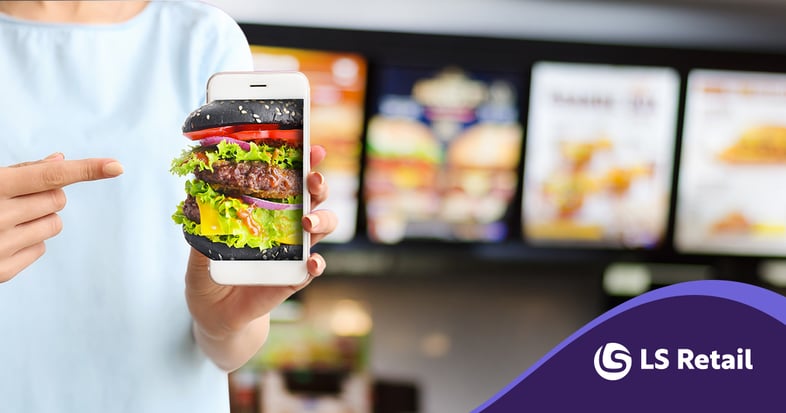
How long are customers prepared to wait for a burger and chips from your fast-food restaurant? Most reports show that, on average, five minutes is the maximum and almost a third expect food within two to three minutes of ordering.
Meeting these rapid turnarounds is becoming a massive challenge as consumer demand for digital ordering capabilities continues to grow exponentially year over year. Head into most quick service restaurants (QSRs) today and manned counters have largely given way to self-service kiosks, mobile apps, QR codes at the table, and delivery platforms.
In fact, major QSRs now receive more than half their orders from digital ordering channels and customers report higher satisfaction when ordering that way. But simply offering digital ordering is no longer enough. The real opportunity lies in how effectively you connect ordering, loyalty, operations and customer data across every channel. If your digital ordering experience isn’t working as hard as it can for your business, you’re leaving revenue on the table.
Here are five ways to change that:
1. Designing faster ordering journeys
Consumers increasingly choose digital ordering channels because they’re fast, convenient, and allow for easy customization without pressure. Today's digital ordering channels are evolving quickly as omnichannel capabilities mature, allowing customers to move seamlessly between kiosks, mobile apps, QR menus, and delivery platforms.
To stand out, the experience needs to feel personalized and consistent. For example, many QSRs are now using AI behind the scenes to dynamically adjust digital menus based on context—like the time of day, local weather, or current inventory—making the user journey faster and highly relevant.
How to do it:
-
Centralize menus, pricing and promotions across POS, kiosk, mobile apps, QR codes, and delivery platforms
-
Mirror your digital menus to the POS with clear visuals and ingredient transparency
-
Enable diners to modify menu items based on allergies, dietary requirements, or preferences
-
Ensure items are automatically marked as “sold out” as soon as ingredients become unavailable
2. Strengthening loyalty through unified customer data
Just recently McDonald’s announced that its loyalty app now reaches 210 million active users across 70 global markets, generating nearly US$37 billion in revenue, making loyalty members the single most important digital metric for the company.
Customers who receive relevant offers at the right time, have their favorite order remembered and earn rewards effortlessly are far more likely to return. To strengthen these relationships, QSRs are increasingly using AI-driven insights to deliver more personalized offers, anticipate customer preferences and encourage repeat visits more effectively. In fact, around 60% of brands say they already use AI daily to support ordering and reservation experiences.
Building this kind of loyalty, however, depends on having connected customer data across every touchpoint. Online and in-store channels need to work together, so customer interactions, preferences and rewards need to be available wherever and however customers choose to engage.
How to do it:
-
Deliver personalized discounts and promotions based on customer behavior
-
Analyze order history and make suggestions based on customer preferences
-
Let customers collect and redeem loyalty rewards across digital and physical channels
-
Promote deals that suit customers' tastes, such as a combo offer with their mosted ordered drink and sandwich, or free dessert.
3. Increase average order size
There’s a good reason why major fast-food chains continue to invest heavily in digital ordering experiences, and it’s not just about speed. Done well, they can also increase basket size and encourage more profitable ordering behavior.
Digital ordering gives operators more opportunities to guide purchasing decisions through personalized recommendations, meal bundles, limited-time offers and intelligent upsell prompts delivered at the right moment.
How to do it:
-
Leverage customer data to deliver more relevant upsell and cross-sell recommendations
-
Use AI to send tailored suggestions to customers at the right times of day
-
Promote bundle deals and meal combinations at the right points in the checkout journey
-
Continuously optimize menu layouts based on ordering behavior
4. Optimize service and staffing
Hiring remains a big operational challenge for QSR operators. And while digital ordering won’t fix the labor market, freeing your team up from manually taking orders means they can focus on the things customers actually notice—like food quality, speed, and great hospitality.
When digital ordering connects to your kitchen display system (KDS) and POS, errors drop and service speeds up. Staff aren’t stuck manually relaying information between systems and orders go where they need to go, automatically.
How to do it:
-
Enable staff to quickly check order status at the POS no matter where the order came from
-
Route orders from every channel directly to the correct preparation stations
-
Use staff management tools to improve planning and preparation based on demand
-
Explore where AI agents could support the ordering journey. For example, many QSRs are deploying agentic assistants that can answer customer questions in real-time.
5. Operate more efficiently across locations
The more locations you run, the more obvious it becomes when your systems don’t properly talk to each other. A menu change might take hours to push across all channels, and you run the risk of inconsistent pricing between different stores and delivery channels.
Over a third of QSR brands say fragmented systems and data is one of their top barriers to a better guest experience, says a report from Forbes. That’s because they create disjointed customer experiences, limit your ability to act on data, and make it harder and more expensive to scale. Connecting all your data so that all your physical and online channels work from the same information makes a real difference and will likely lead to the biggest financial gains.
With a restaurant POS and operations platform like LS Central, you can:
-
Connect to preferred payment and hardware providers, loyalty platforms, and online ordering channels without a complete overhaul
-
Access centralized, real-time data across all locations and channels
-
Expand digital ordering capabilities like QR codes, self-service, and more without adding complexity to day-to-day operations
-
Communicate information automatically between your front and back of house
Talk to our restaurant technology experts to find out how LS Central can help your QSR expand digital ordering capabilities and become more profitable or explore the platform to see what’s possible.