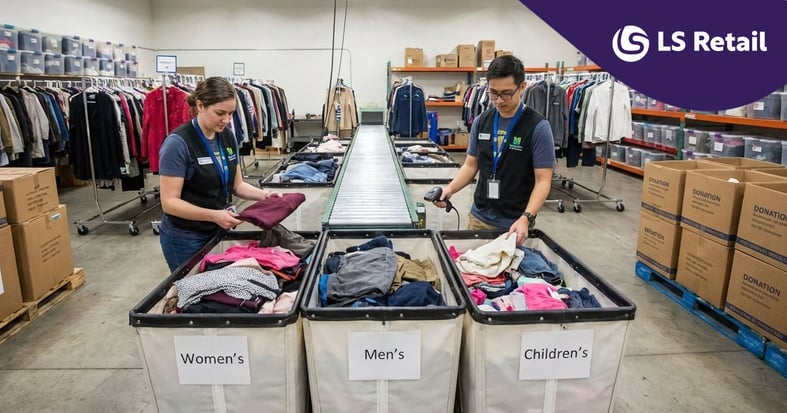
For large nonprofit retail organizations, growth brings a specific kind of pressure. Expanding from 10 stores to 50 is a milestone. Expanding to 100 or more transforms the organization into a complex retail network.
At that scale, small inefficiencies do not stay small. A pricing inconsistency repeated across dozens of stores affects reporting quality. Manual work repeated across locations increases labor pressure. Limited visibility across stores makes it harder to act early when performance starts to slip. Margin erosion at scale rarely announces itself. It builds gradually until the cost structure becomes harder to manage than the growth itself.
This is where operational discipline separates steady operators from high performers.
1. They measure what happens across the store network
High-performing nonprofit retailers know that sales totals alone are not enough. To improve performance across a large network, leadership needs visibility into what is selling, how categories perform by location, how inventory levels compare across locations, and where pricing or operational practices begin to drift.
Mature organizations look beyond revenue. They compare store performance, review category-level sell-through, monitor inventory transfers between locations, and analyze historical sales patterns to understand where performance is improving and where costs are increasing.
The question shifts from "What sold?" to "What is driving performance across the network?" Without consistent retail data across locations, that question becomes difficult to answer reliably.
Retail management platforms like LS Central bring together retail data across stores, including pricing structures, item categories, store inventory visibility, and sales reporting. With consistent data across the network, leadership can compare locations more accurately and identify performance trends earlier.
At 100+ stores, visibility is not simply a reporting advantage. It is a prerequisite for managing performance at scale.
2. They enforce pricing consistency, not just pricing guidelines
In many nonprofit retail networks, pricing varies by store. One location prices a branded jacket at $15. Another prices a similar item at $45. Both relied on local judgment. But inconsistency at scale creates two problems: customers notice, and leadership cannot reliably evaluate category performance.
High-performing organizations do not remove store discretion entirely. They structure it. Pricing logic is defined centrally, while stores retain discretion to adjust prices based on condition or local demand. This does not mean rigid control. It means stores operate within a framework that protects margins while still allowing informed local decisions.
LS Central supports centralized pricing configuration, item categories, and tax-related setup across multiple locations. This allows nonprofit retail networks to maintain consistent pricing structures while still enabling store-level flexibility within defined parameters.
When a network reaches dozens or hundreds of stores, pricing becomes a governance issue, not just a store-level decision.
3. They reduce workforce variability through system design
Large nonprofit retail networks often operate with a mix of paid staff, part-time employees, and volunteers. Turnover can be frequent, training time is limited, and experience levels vary widely.
Many organizations try to address this variability only through training. High-performing networks also address it through system design.
They standardize pricing logic, role permissions, checkout workflows, and reporting definitions across locations. The system carries more of the operational structure, so staff are not expected to memorize rules or improvise during transactions.
Retail platforms like LS Central support centralized configuration of pricing, promotions, permissions, and operational settings across stores. This helps reduce errors at the register, improve consistency between locations, and simplify daily operations even as teams change frequently.
When the system carries more of the operational logic, staff can focus more on customer interactions instead of procedural workarounds.
4. They use data to manage performance, not just track it
For leadership teams overseeing large nonprofit retail networks, consolidated retail data is not just a reporting convenience. It is what makes performance management possible.
Mature organizations use operational data to benchmark stores, compare productivity, analyze sales trends, and support structured reporting for leadership.
In nonprofit organizations, that reporting often extends beyond internal management. Retail networks frequently need to demonstrate performance and accountability to boards, auditors, and funding partners. Consistent reporting across locations helps leadership present clear, traceable information about retail operations — a challenge explored further in From chaos to connectivity: scaling multi-location nonprofit retail.
LS Central provides centralized reporting and transaction traceability across sales and store inventory records. With consistent data structures across stores, organizations can compare performance more reliably and support transparent oversight.
At scale, reporting becomes more than a dashboard. It becomes a governance tool.
Operational excellence is the real mission multiplier
Nonprofit retail does not need to become corporate to become professional. But scale requires structure.
High-performing networks standardize pricing frameworks, improve consistency across locations, reduce avoidable errors, and use consolidated retail data to guide decisions. They understand that operational maturity turns community support into sustainable funding for their mission.
If your organization operates dozens or hundreds of locations, the next question is not simply how to grow further. It is whether your retail operation is structured to perform at the scale you have already reached.
Talk to our experts to explore how LS Central can support store operations, consistency, and visibility across mid-sized to large nonprofit retail networks.